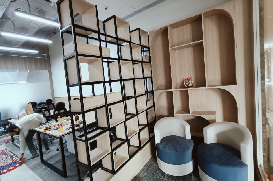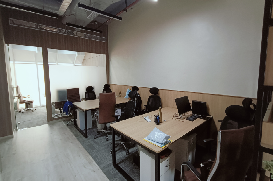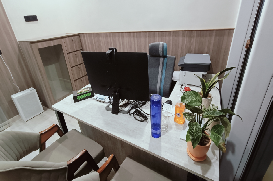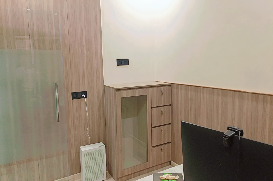

A few years ago, your office may have felt perfect. The team was smaller. Departments were clearly defined. A few meeting rooms were enough, and everyone had a designated desk. Then the business started growing. New people joined. Teams expanded. Some employees began working in hybrid schedules. Departments that rarely interacted suddenly needed to collaborate every day. Before long, the office that once felt spacious started feeling difficult to manage.
One meeting room was never enough. Storage began appearing in places it was never meant to be. New workstations were squeezed into available corners. Employees looking for a quiet place to focus often ended up wearing headphones just to block out distractions.
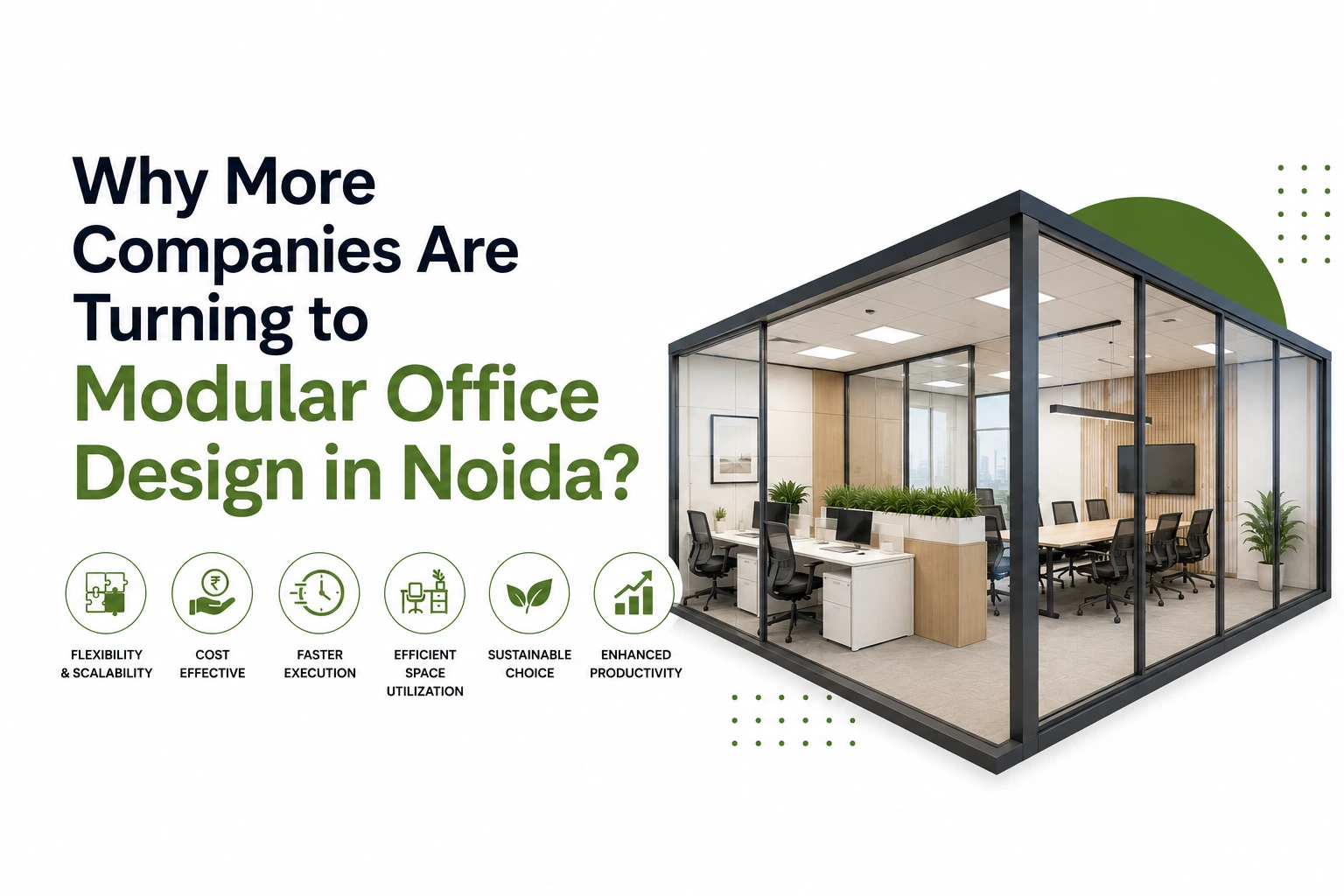
Many business owners assume they have a space problem. In reality, they often have a layout problem. That is one of the biggest reasons companies are exploring Modular office design Noida solutions today. The goal is not necessarily to make the office bigger. The goal is to make it work better.
Growth Has a Way of Exposing Office Problems
When businesses are starting out, people adapt. Employees don’t complain about small inconveniences because everyone is focused on building the company. As the organisation grows, those small inconveniences become harder to ignore.
A conference room that once handled occasional meetings suddenly becomes fully booked. Teams working on collaborative projects struggle to find places to gather. Managers need private discussions but have nowhere appropriate to hold them.
The office slowly starts creating friction. Nobody notices it immediately because the changes happen gradually. Then one day someone asks a simple question:
- “Why does the office feel so crowded all the time?”
Interestingly, the answer is not always because there are too many people. Sometimes the space is simply working against the business instead of supporting it.
The Problem With Designing Offices Around Today’s Team
One mistake many companies make is designing an office only for their current situation. At the time, it felt logical. The layout matches the existing team size. Every department gets allocated space based on present needs. Everything seems organised. Then the business changes. A new department gets created. Sales expands which results in more operational work. Technology teams require additional seating.
Suddenly the office needs to evolve, but the layout is too rigid to adapt. This is where modular planning becomes valuable. Instead of treating the office as something fixed, it treats the workspace as something that can evolve alongside the business. A growing company rarely looks exactly the same two years later. Its office should be able to adjust accordingly.
Why Some Offices Feel Busy Even When Half the Desks Are Empty
This is something many business owners find surprising. An office can feel overcrowded while still having available seating. The reason often comes down to how people use the space.
Employees no longer spend every minute at their desks. They move between meetings, collaborative discussions, focused work sessions, video calls, and informal conversations.
Traditional office layouts were not built for this type of flexibility. As a result, certain areas become overcrowded while other spaces remain underused. A better office design starts by observing how people actually work rather than how they are expected to work. That difference matters.
What Employees Notice That Owners Often Miss?
Business owners usually focus on operational efficiency. Employees experience the office differently. They notice when finding a meeting space becomes frustrating. They notice when noise levels make concentration difficult. They notice when there is nowhere comfortable to have a quick discussion without disturbing others.
These things rarely appear on reports or spreadsheets. Yet they influence the working environment every day. Good Office design services focus on these details because they affect how people experience the workplace. The most successful office spaces are often the ones employees stop thinking about entirely because everything simply works.
Lessons Businesses Can Learn From Co-Working Spaces
One reason modern workspaces have changed so much is the influence of co-working environments. The best co-working operators learned something traditional offices often overlooked. Different tasks require different environments.
Someone writing a report may need complete focus. Another employee may need a collaborative space for brainstorming. A manager may require privacy for a client call. Trying to force all these activities into one type of workspace rarely works well. Many Co-working space interior Gurgaon projects are designed around flexibility for exactly this reason.
Businesses are now bringing similar thinking into their own offices. The goal is not to copy a co-working space. It is to borrow the idea that workplaces should support multiple ways of working.
Renovation Does Not Always Mean Starting Over
A common misconception is that improving an office requires a complete overhaul. That fear often delays important decisions. Many companies continue working in spaces that clearly need updating because they assume renovation will be too disruptive.
In reality, thoughtful planning allows improvements to happen in stages. This approach has become increasingly popular in Office renovation Faridabad projects where businesses want meaningful upgrades without interrupting daily operations. Sometimes relatively small changes in layout can create a surprisingly large difference in how the office functions.
Conclusion
Most office problems do not appear overnight. They develop gradually as businesses grow, teams change, and working styles evolve. What worked perfectly when the company had twenty employees may create challenges when the team reaches fifty or a hundred.
That is why more organisations are exploring Modular office design Noida as a practical way to create flexible workplaces that can adapt over time. Whether a company is considering workplace upgrades, planning an Office renovation Faridabad project, exploring ideas inspired by Co-working space interior Gurgaon, or investing in a new Corporate office interior Faridabad, the objective remains the same: creating a workspace that supports the people using it every day instead of forcing them to work around its limitations.