
How much should you actually spend on your home interiors? It is one of the first questions homeowners ask when they start planning a new house or renovating an existing one. The answer, however, is rarely as simple as a fixed price per square foot. A 2BHK apartment and another 2BHK apartment with the same carpet area can have very different interior budgets. One homeowner may need only wardrobes, a kitchen and basic furniture, while another may want custom furniture, premium finishes, false ceilings, lighting, décor and extensive civil work. If you are exploring Residential Interior Design Delhi NCR, understanding what affects the cost can help you plan your project more confidently.
Brandroot believes that a good interior budget should be built around your home’s requirements, lifestyle and priorities rather than an attractive number quoted without context.
What Is Included in Residential Interior Design?
Before discussing cost, it helps to understand what you are actually paying for. A complete interior design service in Delhi can include several different components:
- Space planning
- Interior design and drawings
- Civil work
- Electrical work
- Lighting
- Flooring
- False ceiling
- Kitchen
- Wardrobes
- Custom furniture
- Storage units
- Wall finishes
- Bathroom work
- Décor
- Hardware
- Installation
- Project management
Not every home requires all of these. For example, a newly constructed apartment may already have flooring, electrical work and bathroom fittings completed. A resale home may need much more renovation before furniture and décor can be added. This is why comparing two interior quotations simply by their total price can be misleading.
What Factors Affect Home Interior Design Cost?
1. Size of the Home
The size of your home naturally affects the amount of material, furniture and work required. However, size alone does not determine the budget. A smaller home with extensive custom furniture can cost more than a larger home with simple interiors. The number of rooms and the level of work in each room matter just as much.
2. Number of Rooms Being Designed
You may not need the same level of work in every room. For example, the living room may require a TV unit, ceiling work, lighting and custom furniture, while a guest bedroom may only need a wardrobe and basic furniture. Deciding which rooms require more attention can help you allocate your budget more wisely.
3. Kitchen Requirements
The kitchen can be a significant part of the interior budget. The final cost depends on:
- Kitchen size
- Cabinet layout
- Materials
- Countertop
- Hardware
- Storage accessories
- Appliances
- Finish
A basic kitchen and a highly customised kitchen can have very different costs. When planning the kitchen, focus on how you cook and store things rather than selecting features simply because they look good.
4. Wardrobes and Storage
Storage is another major part of residential interiors. A wardrobe can be simple or highly customised depending on your requirements. You may want:
- Hanging sections
- Drawers
- Shelves
- Shoe storage
- Accessory storage
- Overhead cabinets
- Dressing area
- Internal lighting
The more detailed the internal configuration, the more it can affect the final cost. However, good storage can be one of the most useful investments in a home because it helps keep everyday spaces organised.
5. Custom Furniture
Custom furniture can include:
- TV units
- Study tables
- Bookshelves
- Beds
- Sideboards
- Shoe cabinets
- Display units
- Bar units
- Storage furniture
The price depends on the dimensions, material, finish, hardware and complexity. You do not have to customise every piece of furniture. A practical approach is to customise the pieces that need to fit a particular space and use ready-made furniture where standard sizes work well.
How Much Should You Spend on Materials?
There is no need to choose the most expensive material for every part of the home. Different areas have different requirements. For example, kitchen and bathroom materials need to handle moisture and regular cleaning. Wardrobes need durable surfaces and reliable hardware. Living room furniture may have different priorities. When comparing materials, consider:
- Durability
- Maintenance
- Appearance
- Usage
- Moisture exposure
- Expected lifespan
- Budget
A material that costs more is not automatically the right choice. The better question is whether it is suitable for the way you will use the space.
Why Two Interior Quotes Can Be So Different
Suppose you approach two interior design companies and receive two very different quotations. That does not necessarily mean one company is overcharging. The scope may be different. One quotation may include:
- Better hardware
- More storage
- Higher-grade materials
- More electrical work
- Custom furniture
- More detailed finishes
- Installation
- Project supervision
The other may include only basic furniture and finishes. Always compare what is included, not just the final number. Ask for the scope to be explained clearly before making a decision.
Where Should You Spend More?
Your budget should reflect how you use your home.
Spend more on things you use every day: Beds, sofas, kitchen hardware, wardrobes and workspaces deserve attention because they directly affect daily comfort.
Invest in good storage: Well-planned storage can make a home easier to maintain.
Pay attention to hardware: Cabinet hinges and drawer mechanisms are used repeatedly. Choosing suitable hardware can improve everyday functionality.
Prioritise lighting: Good lighting can improve both the appearance and usability of a room. You do not need decorative lights everywhere. The right combination of ambient, task and accent lighting is often enough.
Should You Renovate Everything at Once?
Not necessarily. If your budget is limited, consider prioritising the areas that need the most work. For example, you could complete:
- Phase 1: Kitchen and wardrobes
- Phase 2: Living room furniture and TV unit
- Phase 3: Bedrooms and study
- Phase 4: Décor and finishing touches
This approach may work particularly well if some parts of the home are already in good condition. However, phased work needs to be planned carefully. Completing one area later can sometimes affect electrical points, flooring or other work that was easier to complete together. Discuss the sequence with your designer before deciding.
How Brandroot Approaches Residential Interior Design
At Brandroot, the focus should begin with understanding the homeowner rather than starting with a fixed package. Every home has different requirements.
One family may need extensive storage. Another may prioritise an elegant living room. Someone working from home may need a dedicated workspace. A family with children may need durable finishes and flexible storage.
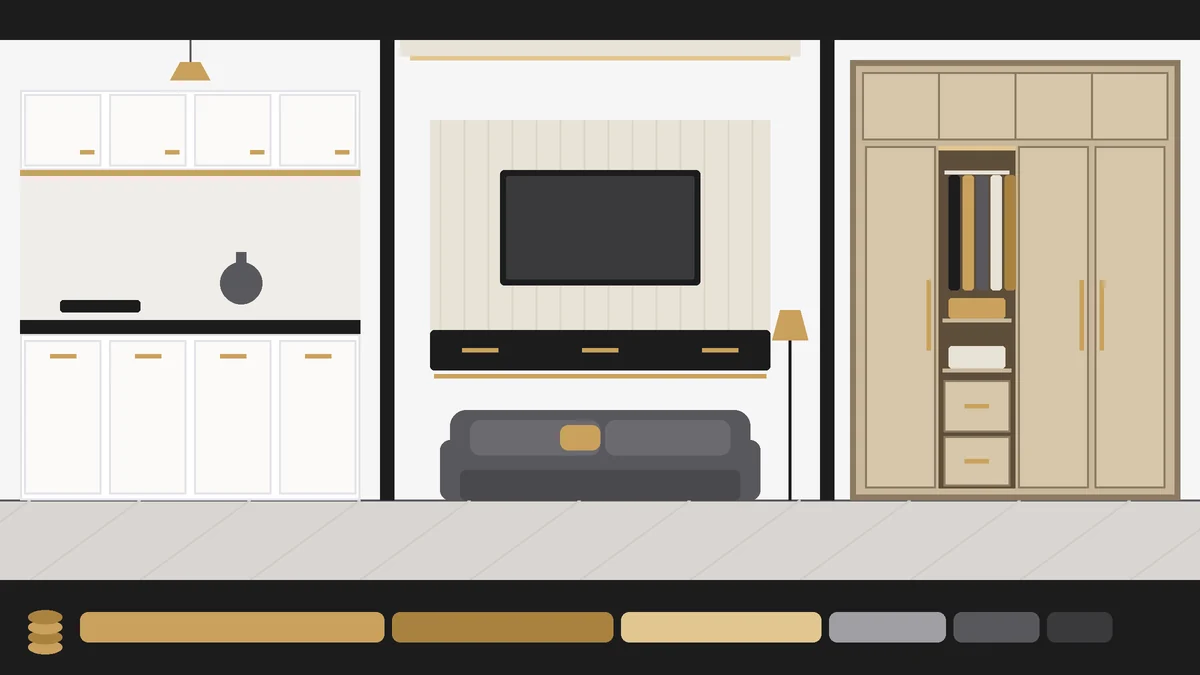
The design should reflect these differences. Brandroot can help bring together space planning, furniture, storage, materials, lighting and finishing into one coordinated interior plan, as you can see in our residential interior projects. The aim is to create a home that feels personal while remaining practical for everyday use.
Final Thoughts
The cost of Residential Interior Design Delhi NCR depends on much more than the size of your home. The layout, number of rooms, kitchen, wardrobes, furniture, materials, electrical work, lighting, finishes and level of customisation can all affect the final budget.
Instead of looking for the cheapest quotation, understand exactly what each quotation includes. Decide which parts of your home deserve greater investment and where a simpler solution will work just as well. Most importantly, start with how you want to live in the space.
With Brandroot, the goal is to bring design and practicality together so that your investment creates a home that looks good, functions well and continues to feel right long after the project is complete. To get a quotation based on your home’s actual scope, book a consultation with the Brandroot team.